CleanTech Hub
Creating a practical hub for the transition from diesel to clean power
The transition to Net Zero requires more than simply developing new technologies. Businesses need practical access to equipment, infrastructure and expertise that allows them to test, charge, deploy and operate clean-energy systems in real-world environments.
Grow Forward created the CleanTech Hub to provide exactly that.
Based at our workshop facility, the CleanTech Hub is being developed as a dedicated centre for Battery Energy Storage Systems (BESS), solar PV, clean temporary power and low-carbon energy technologies. Its purpose is to create the infrastructure needed to support the growing deployment of mobile and stationary battery systems across industries that have traditionally relied upon diesel generators.
Construction, events, film and television production, infrastructure, utilities and temporary power applications all have significant opportunities to reduce their dependence on fossil fuels. However, replacing diesel requires more than supplying a battery. The batteries themselves need to be charged, managed, monitored and deployed effectively.
The CleanTech Hub provides that missing link.
Renewable Energy at the Core
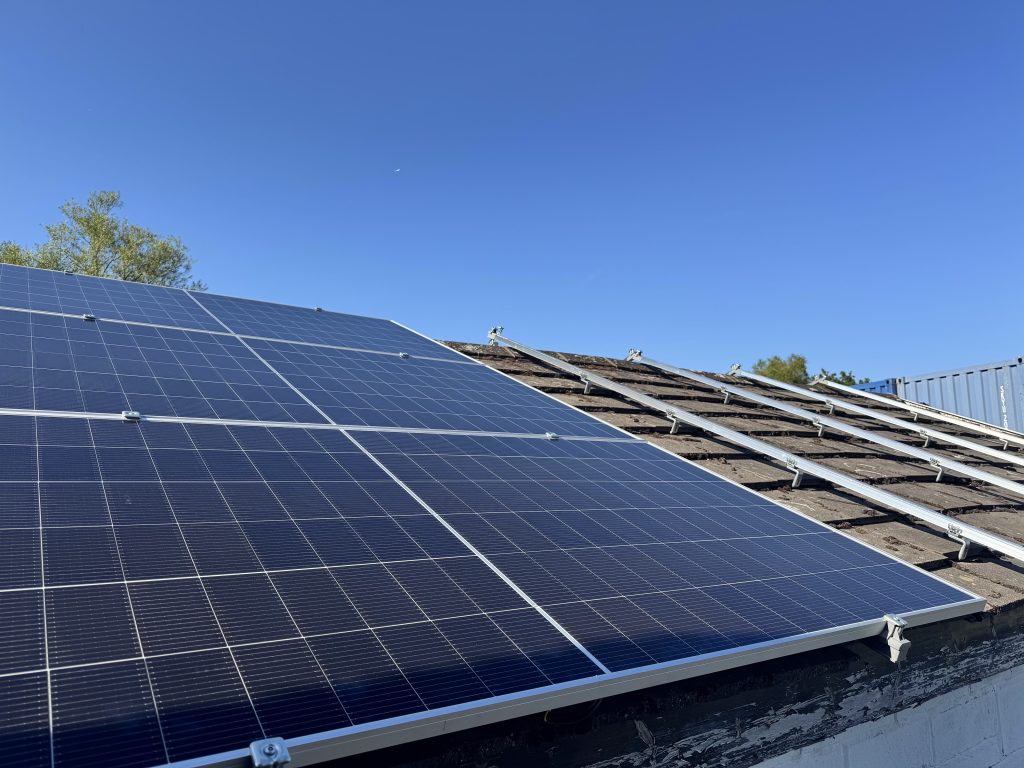
At the heart of the facility is a growing portfolio of on-site solar PV generation.
The first phase incorporates approximately:
6 kWp ground-mounted solar PV
14 kWp warehouse rooftop solar PV
30 kWp planned container-mounted solar PV
The container solar project will utilise five 40-foot shipping containers, creating an additional renewable generation asset while demonstrating how otherwise unused container roof space can become productive energy infrastructure.
Once completed, the Hub will have approximately 50 kWp of on-site solar PV capacity.
Rather than renewable electricity simply being exported when it is not immediately required, the CleanTech Hub uses battery storage to capture that energy and make it available when and where it is needed.
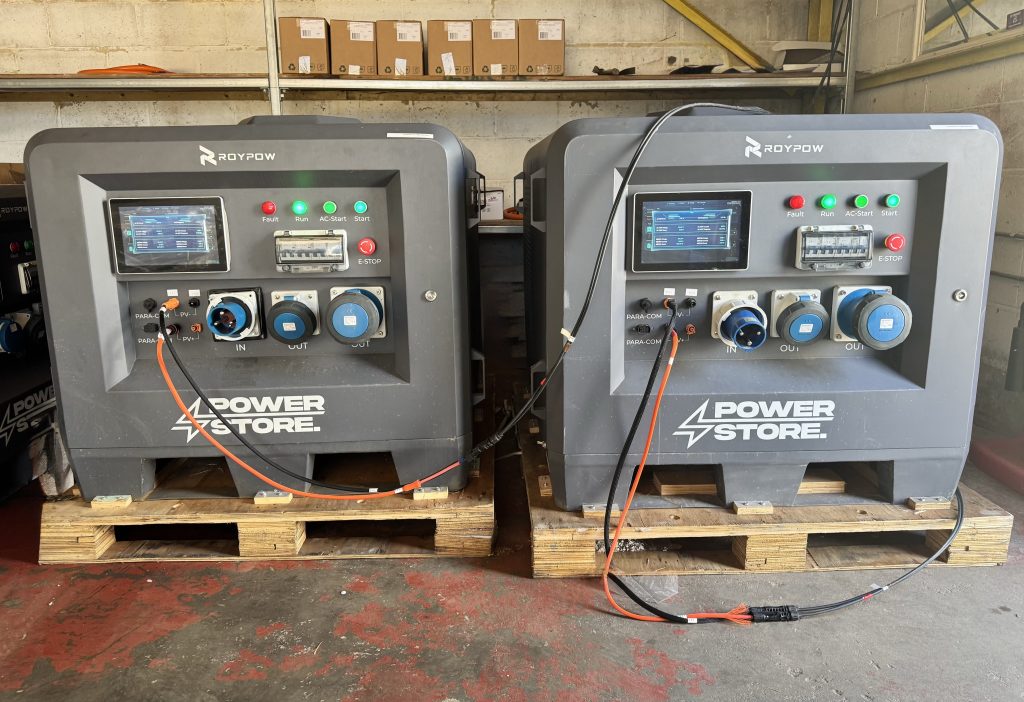
Nearly 400 kWh of Battery Storage
The facility is being designed around almost 400 kWh of combined BESS storage capacity.Stationary BESS provides the energy backbone of the Hub, allowing solar electricity generated throughout the day to be stored and subsequently used for charging mobile battery systems and other equipment.
This creates an important relationship between renewable generation, stationary storage and mobile energy.
Solar PV → Stationary BESS → DC Fast Charging → Mobile BESS → Customer Site
The result is effectively a renewable-energy supply chain.
Instead of a mobile BESS arriving at a customer site having been charged from an unknown electricity source, the CleanTech Hub creates the opportunity for systems to leave the facility pre-charged using locally generated renewable electricity.
DC Fast Charging for BESS
An important part of the infrastructure is DC fast-charging capability.
As mobile BESS systems increase in capacity, conventional AC charging can become a significant operational constraint. Faster charging enables equipment to be turned around more quickly and allows the Hub to support a larger fleet of energy-storage assets.
Combining DC charging with stationary storage also provides the potential to deliver high charging power without relying entirely on instantaneous grid capacity.
This architecture means energy can be accumulated gradually from solar PV and the grid when appropriate, stored within the Hub's stationary BESS and then delivered rapidly when equipment needs charging.
Making Clean Energy Accessible
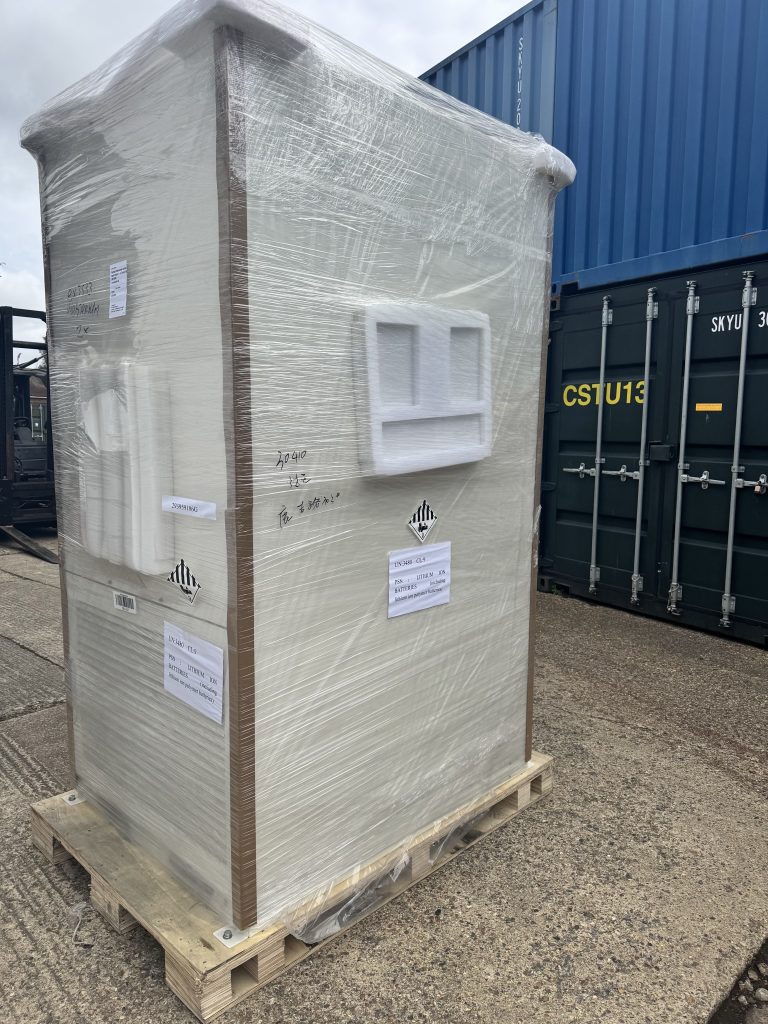
The objective of the CleanTech Hub is not simply to demonstrate technology. It is to make clean-energy equipment practical and accessible to industry.
For many organisations, purchasing a large BESS before understanding how it will perform operationally represents a significant commitment. The Hub provides an environment where equipment can be demonstrated, trialled and prepared for deployment.
This supports applications including temporary construction power, events, film and television production, infrastructure projects, site compounds, backup and UPS applications, EV and equipment charging, and the replacement or hybridisation of diesel generators.
The facility can also provide a platform for testing new BESS technologies, solar integration, charging strategies, monitoring systems, energy-management software and connected IoT devices.
From Clean Technology to a Clean Energy Ecosystem
The CleanTech Hub represents Grow Forward's approach to decarbonisation: connecting technologies together rather than treating them as individual products.
Solar generation creates renewable electricity. Stationary batteries store it. Smart energy management determines how that energy is used. DC charging transfers it efficiently into mobile storage. Connected monitoring provides visibility of energy, location and system performance. Mobile BESS then takes that renewable energy directly to the point where it is required.
This creates a practical pathway for industries to move away from temporary diesel generation without compromising operational resilience.
The CleanTech Hub is therefore both a working energy facility and a real-world demonstrator for the future of distributed clean energy.
As additional solar PV, battery capacity, charging infrastructure and technologies are incorporated, the Hub will continue to evolve as a location where businesses can discover, trial and deploy the technologies required for the transition to Net Zero.